
Income Tax and Income Tax Returns (ITR): An Overview
What is Income Tax?
Income tax is a direct tax levied by the Government of India on the income earned by individuals, Hindu Undivided Families (HUFs), firms, companies, and other entities during a financial year (April 1 to March 31). It is governed primarily by the Income Tax Act, 1961, and administered by the Central Board of Direct Taxes (CBDT) under the Income Tax Department.
Income is classified under five heads for tax purposes:
- Income from Salary
- Income from House Property
- Profits and Gains of Business or Profession
- Capital Gains
- Income from Other Sources
Tax Regimes: Old vs New
Taxpayers can choose between two regimes:
- Old Regime — allows deductions and exemptions (Section 80C, 80D, HRA, etc.) but at higher slab rates.
- New Regime — lower slab rates but with minimal deductions; this is now the default regime unless the taxpayer opts out.
What is an Income Tax Return (ITR)?
An ITR is a form used to declare income earned, taxes paid, and claim refunds (if any) to the Income Tax Department for a given financial year (referred to as the “Assessment Year”). Filing is mandatory for individuals and entities whose income exceeds the basic exemption limit, and for certain categories regardless of income level (e.g., companies, those holding foreign assets, or those seeking refunds).
Types of ITR Forms
| Form | Applicable To |
| ITR-1 (Sahaj) | Resident individuals with salary/pension income up to ₹50 lakh |
| ITR-2 | Individuals/HUFs with capital gains or foreign income, no business income |
| ITR-3 | Individuals/HUFs with business or professional income |
| ITR-4 (Sugam) | Presumptive income scheme taxpayers |
| ITR-5 | Firms, LLPs, AOPs, BOIs |
| ITR-6 | Companies (other than those claiming exemption under Section 11) |
| ITR-7 | Trusts, political parties, charitable institutions |
Why Filing ITR Matters
- Legal compliance — avoids penalties and prosecution under the Act
- Claiming refunds — excess TDS or advance tax paid can be recovered
- Loan and visa processing — banks and embassies often require ITR proof
- Carrying forward losses — business or capital losses can only be carried forward if the return is filed on time
- Proof of income — useful for financial credibility and tenders
Due Dates and Penalties
The standard due date for individuals (non-audit cases) is typically July 31, and October 31 for entities requiring audit, though these dates are notified each year and can be extended. Late filing attracts a fee under Section 234F (up to ₹5,000) and interest on unpaid tax under Sections 234A/B/C.
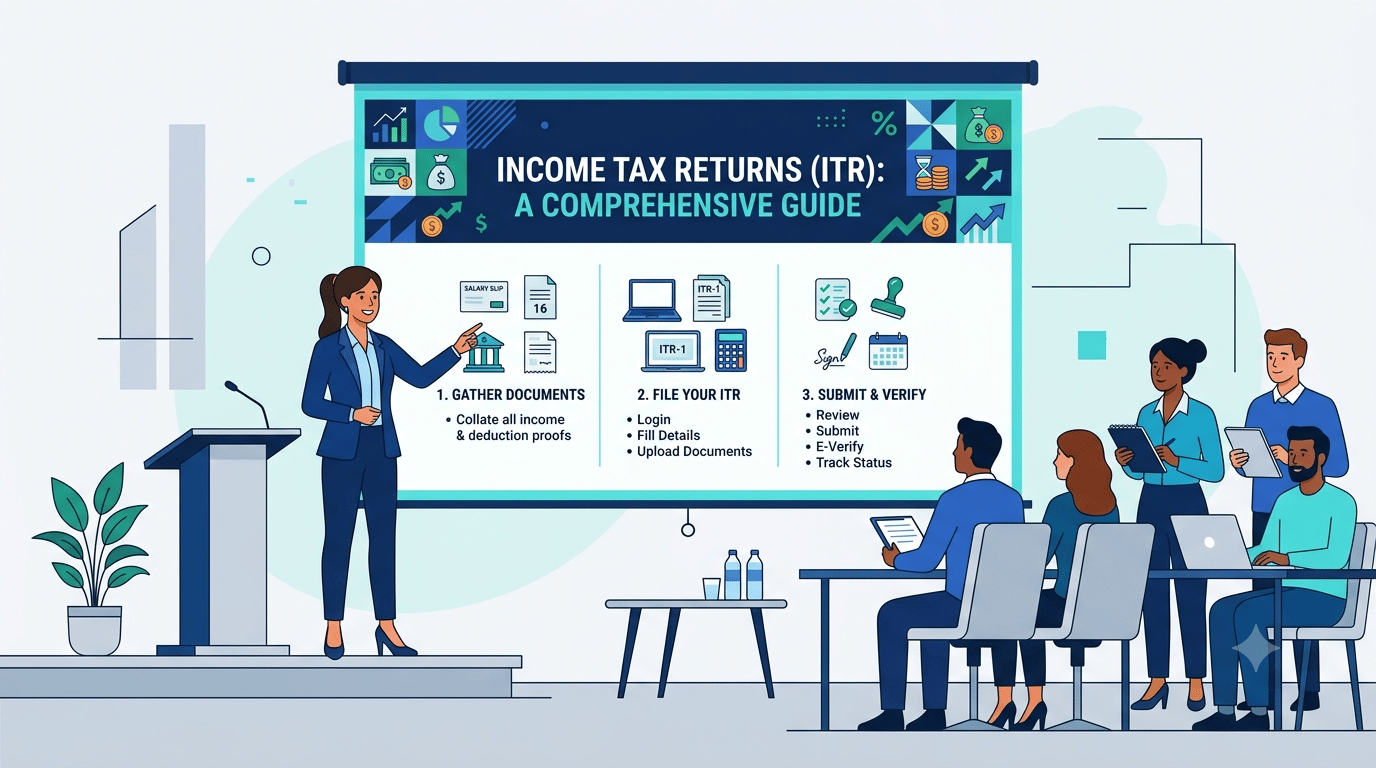
Documents Typically Required
- PAN and Aadhaar
- Form 16 (for salaried individuals)
- Form 26AS / Annual Information Statement (AIS)
- Bank statements
- Investment and deduction proofs
- Details of capital gains, if any
Written by
Govind Sharma
Income Tax and Income Tax Returns (ITR)